Clinical care. Real people.
Clinical
wellness
From formulation to finish, we combine dermatology research, high-performing ingredients and real-world results.
Skin wellness at every step because a beautiful tan is just the beginning.
People at the center. Always.







The first breakthrough
Separate the color from the UV.

DHA does not require UV radiation to create visible color.
It reacts with amino acids in the dead surface cells of the epidermis, forming pigments that temporarily darken the stratum corneum. [2]
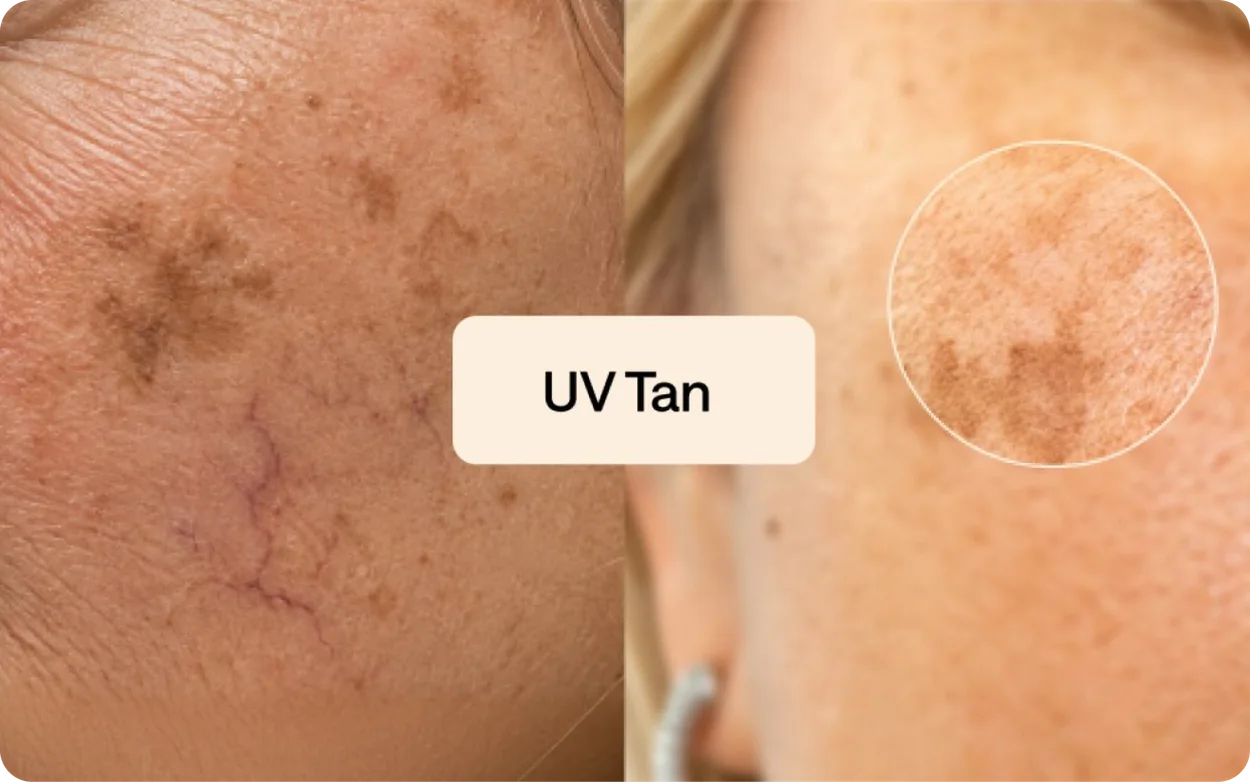
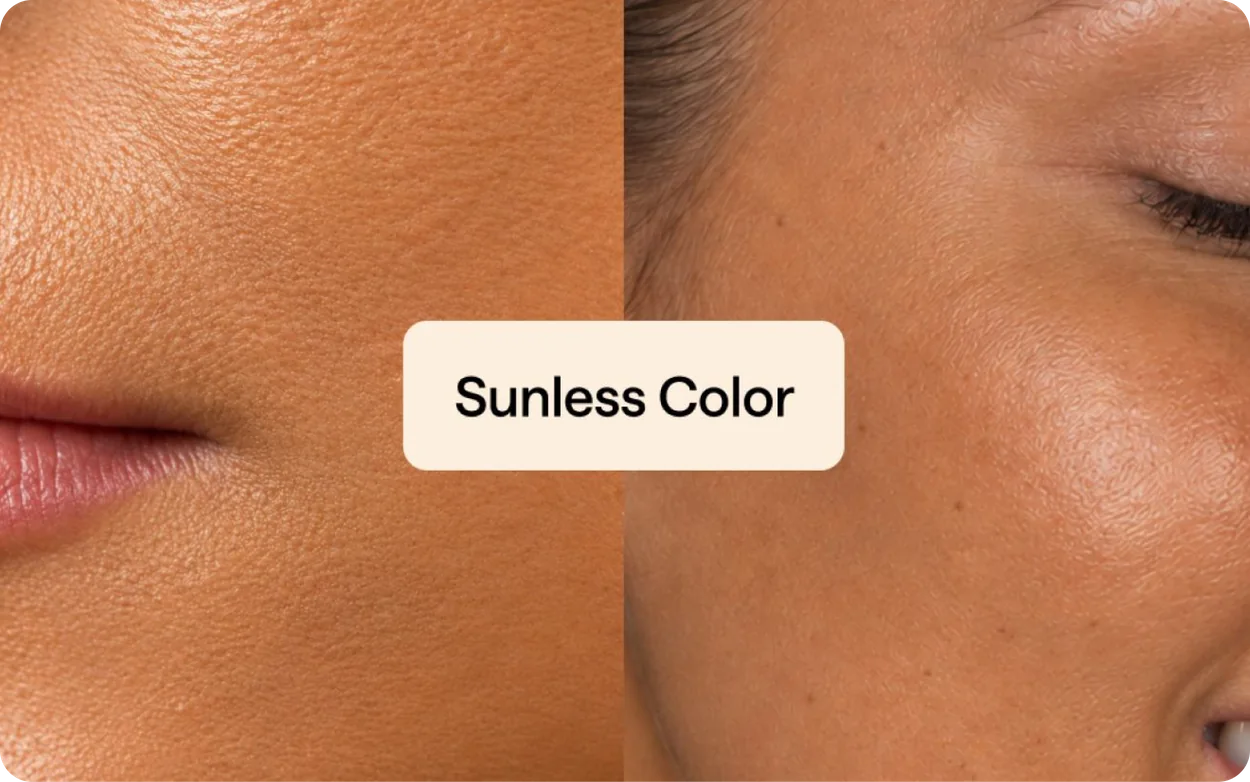

That distinction matters.
The American Academy of Dermatology advises avoiding tanning beds and recommends considering a self tanning product for people who want the appearance of a tan while avoiding intentional UV tanning, and continuing to use sunscreen. [1]
Sunless tanning does not replace sunscreen. SUNKIS does not provide UV protection.
FDA describes DHA as acting on dead surface cells of the epidermis rather than inducing a UV tan.
The science keeps moving
A new systematic review of 16 studies on DHA safety + clinical use
DHA is still being studied by dermatologists today.
The evidence is evolving. We follow it.

The review found no demonstrated harm from DHA use.

The review called for further research into free radicals and long-term exposure. [3]
Author affiliations


Color science
Natural-looking color is more complicated than “darker.”
Warmth over darkness. Dimension over flat color.
 Natural untanned skin
Natural sun tan
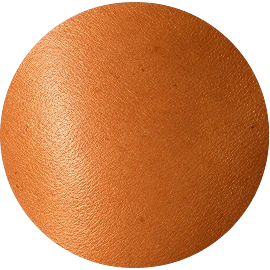
DHA-induced tan
“The magnitude and direction of the colour shift is a critical factor to achieve a natural appearance.” [4]
 Lightness
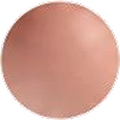 Redness
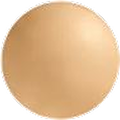 Yellowness


Published research on DHA color development; not a clinical trial of SUNKIS.
The second breakthrough
What if self tanner stopped being only about the tan?
The tan becomes part of the skincare routine
Traditional category

Color
SUNKIS philosophy
- Color
- Hydration
- Barrier
- Antioxidant
- Visible aging support
Once color no longer requires intentional UV tanning, another question becomes possible: what else should the formula do while it’s sitting on your skin? SUNKIS pairs its tanning system with skincare ingredients independently studied for hydration, barrier support, antioxidant activity and visible signs of skin aging.
Bakuchiol research · British Journal of Dermatology
19%
Reduction in fine-wrinkle surface area at week 12
In a randomized, double-blind 12-week study of 44 participants, a topical bakuchiol formulation significantly reduced fine-wrinkle surface area and hyperpigmentation. Bakuchiol and retinol both produced significant improvement; participants using retinol reported more scaling and stinging. [5]
Fine-wrinkle surface area, relative to baseline
Schematic of the published 19% reduction in fine-wrinkle surface area.
- 44 participants
- 12 weeks
- Randomized · double-blind
- Dermatologist-assessed
Published ingredient research
Four more ingredients. Same standard.
-

Niacinamide
Tone. Texture. Elasticity.
Significant improvements vs control in fine lines + wrinkles, hyperpigmented spots, texture, red blotchiness, sallowness and elasticity.
Randomized, double-blind, split-face
50women12 weeks
-
Hyaluronic acid
Hydration has molecular weight.
Significant gains in hydration and elasticity vs placebo; certain lower-molecular-weight formulations also reduced wrinkle depth.
Randomized, several molecular weights
76women60 days
-
Ectoin
Built around water.
Benefits in moisturization, skin-surface structure and elasticity; also studied in skin with impaired barrier function.
Randomized, vehicle-controlled
104women4 weeks
-
Resveratrol
Antioxidant science, applied to skin.
Remained within layers of the stratum corneum while retaining measurable antiradical activity.
Human skin research
6women24 hours

Independent published research on each ingredient. Study formulations and concentrations differed from SUNKIS. Results should not be read as a clinical trial of the finished formula.
The convergence
Two sciences. One new approach to tanning.

Color science
DHA
+ Erythrulose
Color development at the skin surface.
No intentional UV required to develop the tan.

Together
SUNKIS
Warmth + Dimension™
A tanning formula that pairs color
with modern skin wellness.

Skin science
Bakuchiol · Niacinamide · Ectoin
Multi-Molecular HA · Resveratrol
Skincare ingredients that support hydration,
barrier function and visible skin wellness.
Science led. Skin first. Sun kissed.
The science didn’t stop.
Neither did we.
That matters to us.
Our standard is to keep following the research across color science, ingredient science, skin barrier science and dermatology and evolve as the evidence does. [3][11]
Shop SUNKIS
The research library
Research references
- [1]
American Academy of Dermatology Association. How to Prevent Skin Cancer. Updated August 15, 2025. Guidance: avoid tanning beds; consider self tanning products if a tan is desired while continuing sun protection.
- [2]
U.S. Food and Drug Administration. Tanning Products Sunless Tanning Sprays and Lotions. DHA interacts with dead surface cells of the epidermis to darken skin color and simulate a tan.
- [3]
Laferté C, Oliel S, Petr K. Clinical Use and Safety of Self Tanner (Topical Dihydroxyacetone) in Dermatology: A Systematic Review. 2026. DOI: 10.1177/12034754261418253. PMID: 41757797.
- [4]
A Colorimetric Comparison of Sunless With Natural Skin Tan. 2020. PMID: 33315862. Study evaluated DHA induced color changes in 100 participants and concluded that control of both magnitude and direction of color shift is critical to a natural appearance.
- [5]
Dhaliwal S, Rybak I, Ellis SR, et al. Prospective, Randomized, Double Blind Assessment of Topical Bakuchiol and Retinol for Facial Photoageing. British Journal of Dermatology. 2019;180:289 to 296. DOI: 10.1111/bjd.16918. PMID: 29947134.
- [6]
Bissett DL, Oblong JE, Berge CA. Niacinamide: A B Vitamin That Improves Aging Facial Skin Appearance. Dermatologic Surgery. 2005;31:860 to 865. DOI: 10.1111/j.1524-4725.2005.31732. PMID: 16029679.
- [7]
Pavicic T, Gauglitz GG, Lersch P, et al. Efficacy of Cream Based Novel Formulations of Hyaluronic Acid of Different Molecular Weights in Anti Wrinkle Treatment. Journal of Drugs in Dermatology. 2011. PMID: 22052267.
- [8]
In Vivo Assessment of Ectoin: A Randomized, Vehicle Controlled Clinical Trial. PMID: 17519560.
- [9]
Marini A, Reinelt K, Krutmann J, Bilstein A. Ectoine Containing Cream in the Treatment of Mild to Moderate Atopic Dermatitis: A Randomised, Comparator Controlled, Intra Individual Double Blind, Multi Center Trial. Skin Pharmacology and Physiology. 2014;27:57 to 65. DOI: 10.1159/000351381. PMID: 23949258.
- [10]
Alonso C, Martí M, Barba C, et al. Skin Permeation and Antioxidant Efficacy of Topically Applied Resveratrol. Archives of Dermatological Research. 2017. DOI: 10.1007/s00403-017-1740-5. PMID: 28389713.
- [11]
Black TA, Hatch J, Laughter MR, Anderson JB. Sunless Tanners in Dermatology: A Review of Ingredients, Efficacy, and Safety Profiles. Journal of Drugs in Dermatology. 2026;25(1).